
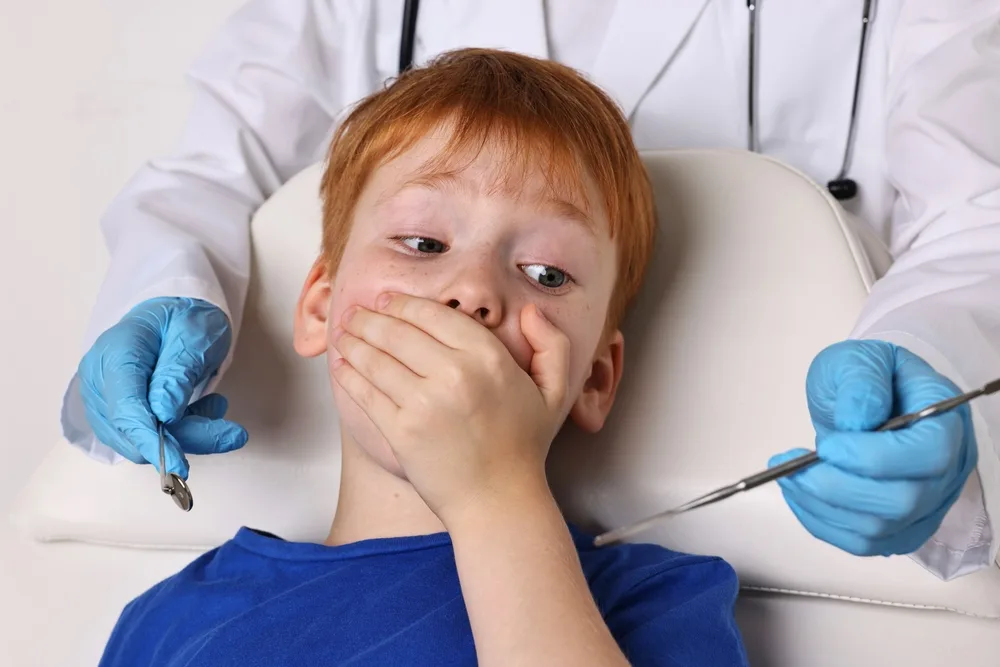
You worry about how a dental visit will affect your child, and that concern can stop you from scheduling important care. You can reduce pediatric dental anxiety with simple, proven steps that build trust, teach coping skills, and use gentle modern techniques when needed.
This article guides you through why young children fear the dentist, how to prepare them emotionally and practically, communication strategies during visits, and both non‑pharmacological and modern clinical options to minimize discomfort. You’ll find clear actions to take before, during, and after appointments so your child feels safer and you feel more confident.
Understanding Anxiety in Young Dental Patients

Children often fear the unknown, feel loss of control, or react to past painful experiences. Recognizing specific triggers, behavioral signs, and the potential impacts helps caregivers and clinicians respond calmly and early.
Common Triggers in Dental Visits
Many triggers are concrete and predictable: unfamiliar sounds (drill, suction), bright lights, and close personal space around the mouth. The smell of antiseptics, dental instruments placed in the mouth, and the sensation of scraping or vibration frequently startle children.
Parental behavior matters. A caregiver’s visible worry, rushed arrival, or using threats (“it won’t hurt if you behave”) increases child distress. Prior medical or dental pain, a negative memory from a sibling or friend, and developmental stages—toddlers’ separation anxiety or school-age fear of needles—also raise risk.
Practical mitigation focuses on the trigger: pre-visit orientation, child-sized language, letting the child see and touch non-threatening instruments, and gradual desensitization appointments. Offering choices (sit in caregiver’s lap or the chair) restores control and reduces fear.
How Anxiety Presents in Children
Anxiety shows as behavior, physical signs, and verbal comments. Behavioral cues include refusal to enter the operatory, clinging to a caregiver, crying, tantrums, or freezing still. Some children become unusually compliant but tense—a “white-knuckled” quiet.
Physical signs include rapid breathing, stomach pain, sweating, or trembling. Older children may voice specific fears (“the drill will hurt”) while younger ones express avoidance through play or regression (thumb-sucking, bedwetting). Note that pain and anxiety can mimic each other; a child who avoids brushing may have untreated pain driving fear.
Clinicians should document frequency, triggers, and effective calming techniques. Short screening questions before treatment (e.g., “Has a dental visit ever hurt you?”) help tailor approaches like tell-show-do, distraction, or scheduling with a trusted caregiver present.
Short- and Long-Term Impact
Short-term consequences include incomplete examinations, canceled procedures, and increased need for behavior guidance or pharmacologic support. A single traumatic visit can create a persistent fear that complicates routine care for months.
Long-term impact affects oral health and overall well-being. Avoidance of regular care raises risk for cavities, untreated infections, and more invasive treatments later. Dental anxiety correlates with poorer oral hygiene habits, social embarrassment about dental appearance, and increased emergency visits.
Early, consistent management—positive first visits, preventive care, and age-appropriate communication—reduces those risks. When anxiety persists despite these measures, referral for behavior therapy or consultation about sedation options helps restore access to necessary dental care.
Building Trust and Comfort Before Appointments
Preparing both parent and child reduces fear and increases cooperation. Small, specific steps at home and before the visit create predictable experiences and signal safety to the child.
Role of Parental Preparation
Parents set the tone through calm behavior and clear expectations. They should practice short, positive scripts—e.g., “The dentist will count teeth and help keep them healthy”—and rehearse them aloud with the child twice in the week before the visit. Avoiding words like “hurt,” “shot,” or “pain” prevents suggestion of threat.
Scheduling matters: pick an appointment time when the child is rested and fed, and arrive 10–15 minutes early to allow a relaxed check-in. Parents should model relaxed body language, steady breathing, and a neutral or cheerful tone. If a parent needs support, they can call the office ahead to request a quiet waiting room or ask whether the child may tour the operatory beforehand.
Bring comfort items (a favorite small toy or blanket) and a simple reward plan—praise or a non-food sticker after the visit. Parents should coordinate with the dental team about any sensory needs or prior traumatic experiences so staff can prepare appropriate accommodations.
Familiarizing Children with the Dental Office
Advance exposure reduces novelty and anxiety. Families can schedule a 10–15 minute “meet and greet” with staff and the operatory, or take a short virtual tour if the clinic offers video. Visiting once before the appointment lets the child see the chair, lights, and friendly faces without treatment.
Use photos of the office and staff at home; show them during play and point out the chair and tools as “helpers.” Role-play at home: practice opening wide, letting someone count teeth, and sitting in a chair for a minute. For sensory-sensitive children, ask the clinic about dimmer lighting, using headphones with favorite music, or applying a weighted lap pad.
Ask the office to explain procedures in advance and to offer a visual schedule—e.g., “check-in → sit in chair → count teeth → rinse” —so the child understands sequence and timing. Predictability builds control and lowers fear.
Child-Friendly Language and Storytelling
Simple, concrete words help children understand without creating alarm. Replace clinical terms with neutral descriptors: “cleaning” for prophylaxis, “counting teeth” for exam, and “spray” for air/water. Keep sentences short and positive: “The dentist will count your teeth and clean them so they stay strong.”
Turn the visit into a short story where the child is the brave main character. Narratives can include stages (arrival, friendly check, quick polish, sticker reward) and sensory cues (“you’ll hear the tick-tick tool; it feels like a small brush”). Use visual aids—picture books, social stories, or simple illustrated checklists—to rehearse steps and choices.
Offer two choices to maintain control: “Would you like the blue bib or the green bib?” or “Do you want to hold the toy or the parent’s hand?” This supports cooperation without overwhelming the child. End the story with a specific, immediate reward like a sticker and a brief celebration to reinforce a positive memory.
Effective Communication During the Visit
Clear, calm language, predictable steps, and small choices help the child feel safe and supported during dental care. Staff can use praise, timers, and straightforward explanations to reduce fear and increase cooperation.
Positive Reinforcement Techniques
Praise should be specific and immediate. Instead of “good job,” say “You kept your mouth open just like we practiced,” which reinforces the behavior the team wants to see.
Use small, tangible rewards tied to effort rather than results. Examples: stickers for sitting calmly, a high-five for listening, or choosing a toothpaste flavor after a checkup. Rotate rewards so they stay meaningful.
Employ a token system for longer appointments. Track each completed step (wait in the chair, open mouth, let hygienist count teeth) and exchange tokens for a preferred prize at the end. This creates short-term goals that feel achievable.
Train all staff to match tone and volume to the child’s needs. Calm, upbeat voices work well for anxious children; playful tones help distract younger kids. Consistent language across team members prevents mixed messages.
Empowering Children with Choice
Offer limited, meaningful choices to give children control without overwhelming them. Choices should be binary and relevant, such as “Do you want the blue bib or the green one?” or “Would you like to hold the stuffed animal or the mirror?”
Use choices to pace the appointment. Ask, “Would you like me to count to three before we begin?” or “Do you want a break after we finish this step?” This reduces suddenness and builds trust.
Explain the consequences of choices in simple terms. For instance: “If you choose the break now, we will pause for two minutes and then finish the next step.” That sets expectations and keeps the process predictable.
Document preferred choices in the patient chart. Note sensory sensitivities, favorite distractions, and effective phrases. Future visits become smoother when the team remembers specific options that worked before.
Gentle Explanation of Procedures
Describe procedures using concrete, age-appropriate words. Replace technical terms with short phrases: “counting teeth” instead of “oral exam,” “tooth cleaner” instead of “prophy.” Keep sentences under two clauses.
Use teach-show-do: say what will happen, show the instrument outside the mouth, then do the step. For example: “This is the mirror; I will touch it to your cheek first,” helps the child form accurate expectations.
Incorporate visual aids and models. Point to a tooth model and say, “This is the tooth we will look at,” or use a tablet video that demonstrates the same steps. Visuals reduce imagination-driven fear.
Allow the caregiver to participate in explanations. A parent can repeat phrases or hold the child’s hand. That shared language reinforces comfort and increases cooperation during the actual procedure.
Non-Pharmacological Techniques for Relaxation
These methods reduce fear and increase cooperation by shifting attention, lowering heart rate, and building a sense of control. Practical tools include visual and auditory distraction, simple breathing routines, and short guided imagery scripts tailored for children.
Distraction Strategies
Distraction works by replacing focus on procedures with engaging stimuli. Common clinic techniques include ceiling-mounted TVs, tablet apps with interactive games, storybooks, and child-friendly headphones playing music or audiobooks.
Clinicians often let the child choose the content; giving that choice increases cooperation and reduces resistance. For younger children, sensory toys (squeeze balls, tactile pads) and bubble wands provide immediate, calming input.
Use brief, structured distraction during specific steps—cleaning, X-rays, or injection—to prevent buildup of anxiety. Combine visual and auditory elements for stronger effect: for example, a cartoon on a tablet plus a narrated story through headphones.
Train staff to cue distraction (“pick the game now”) so transitions stay predictable and short, which helps especially with children who have limited attention spans or developmental differences.
Breathing Exercises and Guided Imagery
Simple breathing techniques help lower physiologic arousal and are easy to teach in the clinic. Inhale slowly through the nose for a count of three, hold one second, then exhale through pursed lips for a count of four; repeat three to five times. Clinicians can demonstrate and practice once before treatment so the child feels confident using it during procedures.
Use concrete language and props—“smell the flower, blow out the candle”—for preschoolers. Older children respond well to counting or balloon imagery.
Guided imagery pairs breathing with a short, specific scenario to focus attention: imagining a kite flying, walking on a warm beach, or visiting a favorite park. Keep scripts under 60 seconds and use sensory cues: “Feel the sun on your shoulders, hear gentle waves.”
Offer a printed one-line prompt or a two-sentence audio clip the child can replay. Combining breathing with imagery improves pain tolerance and reduces verbal distress, especially when practiced before the appointment.
Modern Approaches to Minimizing Discomfort
Modern pediatric dental care uses targeted, low-stress methods to reduce pain and fear before and during treatment. These methods focus on eliminating needle pain, shortening procedure time, and using technology that reduces vibration and pressure.
Needle-Free Anesthesia Options
Topical anesthetic gels and sprays numb soft tissue and are useful for sealants, cleanings, and minor restorations. They often combine benzocaine or lidocaine in child-appropriate concentrations; clinicians apply them for 30–60 seconds and confirm numbness before proceeding.
Inhaled nitrous oxide provides mild sedation and analgesia without injections. It acts within minutes, wears off quickly after the mask is removed, and allows the child to stay responsive and breathe normally. Providers titrate concentration and monitor oxygen to keep effects safe.
Computer-controlled local anesthetic delivery (C-CLAD) systems reduce injection pain by controlling flow rate and pressure. These devices warm and slowly deliver anesthetic through a small needle, often making the injection feel like pressure rather than a sharp poke. Proper technique and child positioning further lower discomfort.
Advanced Technology for Painless Procedures
High-speed dental lasers can remove decay, prepare enamel, and treat soft tissue with less vibration and reduced need for anesthesia. For many small cavities, lasers eliminate the drill entirely, minimizing noise and the sensation children associate with pain.
Air abrasion uses a fine aluminum oxide or silica stream to remove decay without contact or heat. It’s ideal for conservative restorations and works quietly, which helps anxious children. Dentists select particle size and pressure to match cavity depth and child’s tolerance.
Electric handpieces and micro-motor systems produce smoother cutting with less noise and reduced pressure compared with traditional air turbines. When combined with magnification and digital imaging, clinicians complete procedures faster and with greater precision, decreasing chair time and overall discomfort.
When Sedation May Be Recommended
Sedation becomes an option when a child cannot cooperate due to fear, young age, strong gag reflex, or extensive treatment needs. The goal is to allow safe, effective care while keeping the child calm and comfortable.
Types of Sedation and What to Expect
Dentists typically use three levels of sedation for children: minimal (nitrous oxide), moderate (oral or IV sedatives), and deep or general anesthesia for complex cases. Nitrous oxide (laughing gas) starts working within minutes, reduces anxiety, and wears off quickly so the child can go home the same day.
Oral conscious sedation uses a pill or liquid like midazolam given before the visit; it relaxes the child but they remain responsive. IV sedation provides faster, adjustable control and is used when stronger, titratable sedation is needed. General anesthesia renders the child fully unconscious and is reserved for long, extensive procedures or when cooperation is impossible.
Expect pre-visit instructions about fasting, current medications, and arrival time. Recovery times vary: nitrous oxide recovery is immediate, oral sedation may take several hours, and general anesthesia requires monitoring until vital signs stabilize. The dental team will explain monitoring devices and discharge criteria.
Safety Measures and Parental Guidance
Dentists follow strict protocols: pre-operative assessment, medical history review, and allergy checks. Certified personnel administer sedation and use continuous monitoring of heart rate, oxygen saturation, blood pressure, and respiratory status during the procedure.
Parents must disclose recent illnesses, sleep apnea, or medication use, and follow fasting rules—no solids for 6–8 hours and clear liquids up to 2 hours before most sedations, unless the dentist specifies otherwise. Bring a responsible adult to drive the child home and stay for post-op instructions.
Provide written consent after discussing risks and benefits, and ask for the office’s emergency plan and anesthesia team credentials. Keep soft foods ready at home and watch for prolonged drowsiness, vomiting, or breathing changes—call the office or emergency services if concerning symptoms appear.
Ongoing Support and Preventive Care
This section explains practical steps to keep dental visits calm and prevent problems before they start. It focuses on consistent clinic routines and simple home habits that reduce fear and lower cavities.
Regular Visits to Reduce Anxiety
Regular checkups build familiarity and lower fear by using short, predictable visits. Clinics should schedule brief 10–20 minute “meet-and-greet” appointments every 3–6 months for young children to practice sitting in the chair, hearing instruments, and meeting staff without procedures.
Dentists and hygienists use consistent language and visual schedules so children know what will happen next. They can offer tell-show-do demonstrations, use nonthreatening names for tools, and provide a reward system (stickers, tooth-brushing charts) to reinforce cooperative behavior.
When a child shows persistent anxiety, clinics may offer desensitization plans with incremental exposure over several visits. For children with special healthcare needs, coordinate shorter visits at quieter times, provide noise-cancelling headphones, and allow a caregiver in the operatory to maintain comfort.
Creating Positive Dental Routines at Home
Daily routines at home shape expectations and reduce fear of dental care. Caregivers should brush twice daily with a pea-sized amount of fluoride toothpaste, floss once daily when teeth touch, and practice brushing while using a timer or a two-minute playlist to make timing predictable.
Use role-play and storybooks about dental visits to normalize appointments; have a child act as the “dentist” and count teeth in a mirror. Keep language neutral and specific: say “clean teeth” or “counting teeth,” not “no pain.” Praise effort rather than outcomes to build confidence.
Maintain a diet low in frequent sugary snacks and drinks; offer water between meals and serve fruit instead of sticky candies. Track dental appointments on a family calendar and prepare a small comfort item for the visit (favorite toy or blanket) to ease transitions and reinforce positive associations.
Empowering Children for Lifelong Oral Health
Parents and dental teams can build confidence in kids by using simple, age‑appropriate explanations about dental visits. Short, clear descriptions reduce the unknowns that cause fear and help children feel in control.
Role‑playing and practice visits work well. A quick pretend check at home or a short office tour lets a child learn the sounds, sights, and routines without pressure.
Positive reinforcement encourages repeat behavior. Praise, sticker charts, or choosing a small reward after a visit focus attention on effort and bravery rather than perfection.
Teach daily habits with short, consistent routines. A two‑minute brushing song, flossing once a day, and limiting sugary snacks make oral health manageable for families.
Use visual tools to teach technique and progress.
- Toothbrush timers or apps
- Simple diagrams showing brushing zones
- Charts that track daily care
Modern pediatric care offers gentle supports like desensitization, behavioral guidance, and, when needed, sedation options. The dental team should explain these choices calmly, aiming to match the approach to each child’s needs.
Encourage questions from both child and caregiver. When providers invite curiosity and answer plainly, children learn that dental care is safe and predictable.
Offer a clear next step: schedule a preventive visit, ask about in‑office comfort strategies, or request a brief meet‑and‑greet appointment to ease the first visit.
Frequently Asked Questions
Parents often want clear, practical steps for calming children, handling uncooperative behavior, understanding gentle techniques and sedation options, and adapting care for kids with sensory or developmental differences.
How can I help my child feel calmer before a dental appointment?
Give a simple, honest explanation of what will happen using age‑appropriate words. Read a children’s book about the dentist or play “dentist” at home so the child knows basic steps.
Schedule the visit at a time when the child is well‑rested and fed. Bring a favorite toy, blanket, or headphones for comfort and distraction.
Avoid surprising the child with details about injections or tools; instead, describe sensations (e.g., “a little pinch” or “cold rinse”) only if the provider recommends it. Practice deep breathing together for a minute before you walk in.
What should I do if my child refuses to open their mouth or won’t cooperate during treatment?
Stay calm and use a neutral, supportive tone; children respond to parental anxiety. Let the dental team try brief, low‑pressure techniques first, like modeling with a mirror or letting the child touch instruments.
If resistance continues, ask the dentist about breaking the appointment into short visits to build trust. The team may recommend behavior guidance or mild sedation options when necessary for safe, effective care.
What are gentle behavior techniques pediatric dentists use to help scared kids?
Dentists use tell‑show‑do: they explain, demonstrate on a finger or toy, then perform the procedure. Positive reinforcement, such as praise, stickers, or small rewards, encourages cooperation.
They also use distraction methods like video goggles, storytelling, or music. For very anxious children, a “hand‑over‑mouth” is no longer used; modern practices emphasize consent, clear communication, and gradual exposure.
Is sedation ever appropriate for children who are very anxious, and what options are available?
Sedation is appropriate when anxiety prevents safe, effective treatment or when extensive work is needed. Options include nitrous oxide (laughing gas), oral sedatives prescribed and dosed for the child, and monitored general anesthesia for complex cases.
The dental team will review medical history, fasting rules, and risks; they obtain informed consent and monitor vital signs throughout. Always choose a practice with trained staff and appropriate emergency protocols.
Can a child with special needs or sensory sensitivities get comfortable dental care, and how is it adapted?
Yes. Dentists create individualized plans that might include extra appointment time, sensory‑friendly lighting, weighted blankets, or predictable step‑by‑step routines. Caregivers should share sensory triggers, communication preferences, and successful calming strategies before the visit.
Some clinics offer desensitization visits to practice the environment and procedures. If necessary, the team coordinates with primary care providers and may use sedation tailored to the child’s needs.
What should I avoid saying or doing at home that might accidentally increase my child’s fear of the dentist?
Avoid using threats or warnings about the dentist as punishment; phrases like “the dentist will hurt you” increase fear. Don’t over‑reassure with unrealistic promises such as “it won’t hurt at all” if there might be mild discomfort.
Refrain from sharing your own dental anxieties in frightening detail. Instead, model calm behavior, focus on practical coping skills, and encourage questions the child can ask the dentist.